Your website is often the first impression potential customers have of your business. If it's slow, outdated, difficult to navigate, or not optimized for mobile devices, you could be losing valuable leads every day.
Many small business owners ask the same question:
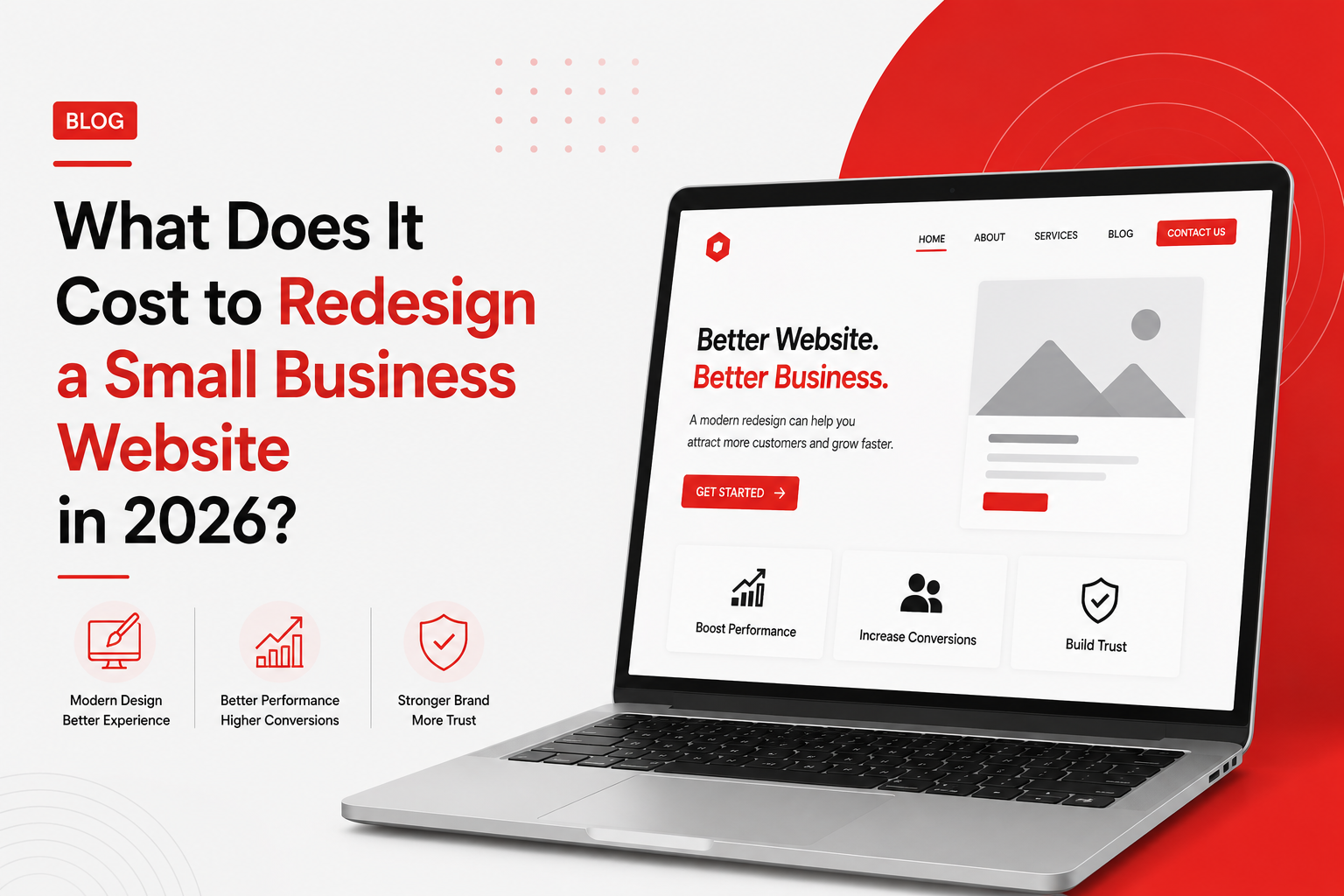
How much does it cost to redesign a small business website in 2026?
The answer depends on your business goals, the complexity of your website, and the features you need. A simple refresh may cost a few hundred dollars, while a complete redesign with custom functionality can cost several thousand.
In this guide, we'll explain everything you need to know about website redesign pricing in 2026, what affects the cost, and how to make the best investment for your business.
Why Redesign Your Website?
A website redesign isn't just about making your site look better. It's about improving the overall user experience, increasing conversions, strengthening your brand, and ensuring your website supports your business goals.
Businesses typically redesign their websites because:
The design looks outdated.
The website isn't mobile-friendly.
Pages load too slowly.
Leads or sales have declined.
The site is difficult to update.
SEO performance has dropped.
Competitors have modern, faster websites.
Security or CMS software is outdated.
A professional redesign improves performance while positioning your business for future growth.
What Influences Website Redesign Costs?
Every business has different needs. Here are the biggest factors that impact pricing.
1. Number of Pages
A five-page website requires much less work than a website with 80 pages.
Typical work includes:
Updating layouts
Optimizing content
Creating responsive designs
Internal linking
SEO optimization
More pages generally mean higher costs.
2. Custom Design
Using a pre-built template is less expensive than creating a completely custom website.
Custom design includes:
Unique layouts
Brand-focused visuals
Better user experience
Improved conversion optimization
Scalability
Although it costs more initially, custom design often delivers better long-term results.
3. Development Complexity
Simple websites require less development than websites with advanced functionality.
Examples include:
Customer portals
Booking systems
Payment gateways
Membership features
Dashboards
API integrations
CRM integrations
Custom calculators
Interactive forms
Each additional feature increases development time.
4. Content Updates
Some redesign projects include:
Copywriting
Blog migration
Image optimization
New photography
Video integration
Content restructuring
If your existing content needs significant improvement, this will affect the total project cost.
5. SEO Preservation
One of the biggest mistakes businesses make is redesigning their website without protecting their existing search rankings.
Professional redesign projects should include:
URL mapping
301 redirects
Metadata preservation
Sitemap updates
Internal linking review
Broken link fixes
Schema markup
Performance optimization
Skipping these steps can result in lost traffic and lower rankings.
6. Mobile Optimization
More than half of website traffic now comes from mobile devices.
A redesigned website should:
Look great on all screen sizes
Load quickly
Be easy to navigate
Have touch-friendly buttons
Pass Google's mobile usability checks
Responsive design is no longer optional.
7. CMS Platform
The platform you choose also affects pricing.
Popular options include:
WordPress
Laravel
Next.js
Shopify
Webflow
Headless CMS solutions
Custom frameworks generally require a larger investment but offer greater flexibility.
Hidden Costs to Consider
When budgeting for a redesign, remember to include additional expenses such as:
Domain renewal
Website hosting
SSL certificate
Premium plugins
Licensing fees
Ongoing maintenance
Security monitoring
Backup solutions
Email hosting
Analytics setup
Understanding these costs upfront helps you avoid surprises later.
Freelancer vs Agency Pricing
Freelancer
Pros
Lower rates
Flexible
Suitable for small projects
Cons
Limited resources
May specialize in only one area
Availability can vary
Web Development Agency
Pros
Dedicated designers and developers
SEO expertise
Project management
Quality assurance
Long-term support
Faster delivery
Cons
Higher upfront investment
For businesses planning long-term growth, working with an experienced agency often provides better value.
Is Website Redesign Worth the Investment?
Absolutely.
A professionally redesigned website can deliver measurable business benefits:
Better user experience
Increased credibility
More inquiries
Higher conversion rates
Faster page speeds
Better search rankings
Improved accessibility
Stronger brand identity
Easier content management
A website should be viewed as a business asset rather than an expense.
How Often Should You Redesign Your Website?
Most businesses benefit from a redesign every 3–5 years.
However, you may need one sooner if:
Your branding has changed.
Your website isn't mobile-friendly.
Competitors offer a much better online experience.
Your site is slow.
Your conversion rate has declined.
You receive frequent customer complaints about usability.
Regular updates keep your website competitive.
How to Reduce Website Redesign Costs
You don't always need the most expensive solution.
Here are some practical ways to keep costs under control:
Keep your existing branding if it's still effective.
Update only the pages that need improvement.
Reuse high-quality content.
Prepare images before development begins.
Clearly define your project scope.
Avoid unnecessary features.
Choose scalable technology.
Work with experienced professionals from the start.
Planning ahead can save both time and money.
Questions to Ask Before Hiring a Web Design Company
Before signing a contract, ask:
Have you redesigned websites similar to mine?
What technologies do you use?
Will my SEO rankings be protected?
Is the design fully responsive?
Will I be able to update content myself?
What's included in the quoted price?
Do you provide ongoing maintenance?
How long will the project take?
What happens after launch?
These questions help ensure you're choosing the right partner.
Frequently Asked Questions
How much should a small business spend on a website redesign?
Most small businesses spend between $5,00 and $1,500, depending on the website's size and required functionality.
Can I redesign my website without losing SEO rankings?
Yes. A properly planned redesign preserves your rankings through URL mapping, redirects, technical SEO, and content optimization.
How long does a redesign take?
Typical timelines are:
Small website: 2–4 weeks
Business website: 4–8 weeks
Custom website: 8–16 weeks
Project scope has the biggest impact on delivery time.
Is it better to redesign or build a new website?
If your existing website has outdated technology, poor structure, or major performance issues, rebuilding is often the better long-term investment. If the foundation is solid, a redesign may be enough.
Final Thoughts
A website redesign is one of the smartest investments a small business can make in 2026. Beyond improving your site's appearance, it enhances performance, user experience, search visibility, and conversion potential.
The right redesign should align with your business goals, support future growth, and provide a seamless experience for your visitors across all devices.
Instead of choosing the cheapest option, focus on long-term value. A well-planned redesign can generate more leads, improve customer trust, and deliver a strong return on investment for years to come.
Ready to Redesign Your Website?
Whether you need a modern business website, a high-converting landing page, or a complete custom web solution, our team can help you create a fast, secure, SEO-friendly website tailored to your goals.
Get in touch today for a free consultation and personalized website redesign quote.